
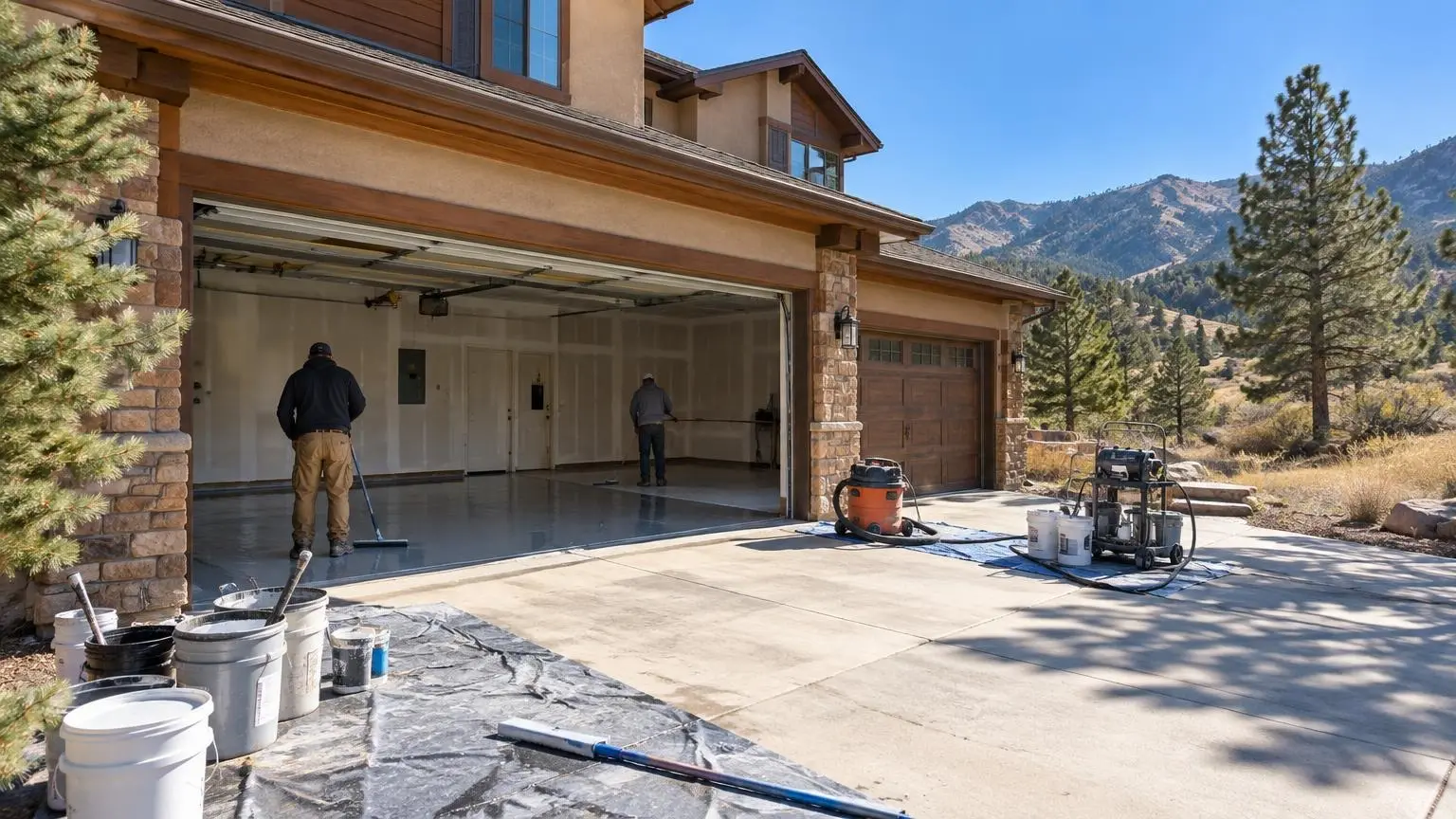
Finish the floor without carpet
Basement Floor Epoxy in Boulder, CO
A clean, sealed floor for rec rooms, gyms, laundry and storage, starting with a moisture test.
- Free on-site estimates
- Slab moisture-tested before we coat
- Written quote before work starts
Basement Floors Start With Moisture and Movement
Basement floor epoxy turns a dusty, cold concrete floor into a sealed surface that is easy to clean and holds up to furniture, gym equipment and the occasional spill. Many Front Range homes have basements, and a coating is a practical alternative to carpet in rec rooms, home gyms, laundry areas and storage rooms, because it does not trap moisture or odors the way carpet can.
Basements are also where coatings face the most moisture risk. A slab below grade can wick moisture up from the soil. Trapped under a coating, that moisture builds pressure and the coating blisters or lifts. Every basement job starts with a moisture test, and we tell you plainly if your slab is not a good candidate.
Swelling soils and basement slabs
The Colorado Geological Survey notes that cracked and heaved basement floor slabs are very common in areas with expansive clay, which is widespread in Colorado. Stable cracks can be repaired and coated. A slab that is still moving, or a floor that has lifted against a framed wall, needs an engineer's opinion before any finish goes down, and we will tell you if we see signs of that.
When a basement is not ready for a coating
- Active leaks, standing water after storms or a sump that runs constantly
- White mineral deposits (efflorescence) spreading across the floor
- A moisture reading above what the coating system allows
Some of those can be handled with a moisture-tolerant primer. Active water problems need to be fixed before any floor is installed.
Coatings and radon
Boulder County reports that one in two homes in the county has elevated radon, and the EPA ranks the county Zone 1. A floor coating is not a radon mitigation system, and we never sell it as one. If you have not tested, do that with a certified radon professional before finishing the space, and if you have a mitigation system, we coat around its sump and piping without disturbing it.
Choosing the finish
Most basement floors get either a flake system, which hides imperfections and adds texture, or a metallic finish for a more polished look. Both sit on the same ground, repaired and primed slab.
Basement gyms and workshops
Home gyms are a natural fit for a coated basement. A coated floor holds up to dropped weights better than carpet, especially under rubber mats in the lifting area, and wipes down easily. For gyms and workshops, we recommend a thicker build and a textured topcoat.
What This Covers
A basement floor job typically includes these steps.
Moisture testing
Testing the slab before choosing a system, so the coating is not pushed off from below.
Grinding and crack repair
Removing old paint, adhesive and sealers, and filling cracks and pits.
Moisture-tolerant primer
Used where testing shows elevated but manageable moisture.
Flake or metallic finish
The decorative layer and a clear topcoat, chosen for how the room will be used.
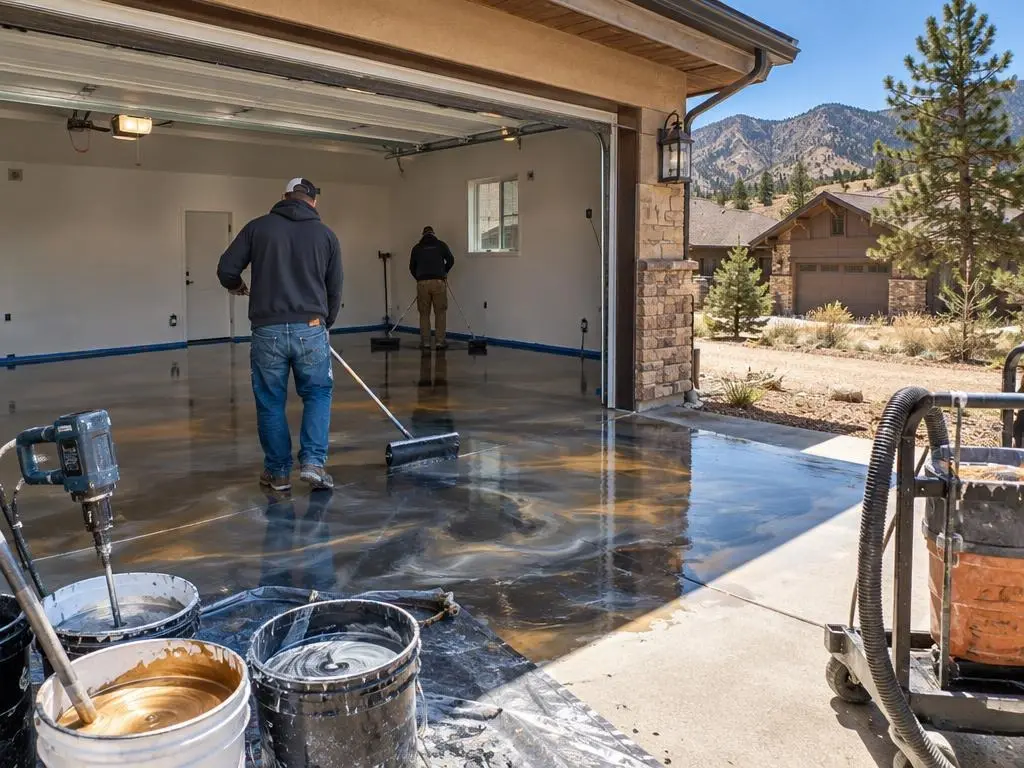
Typical Basement Floor Costs
| System | Published national range per sq ft |
|---|---|
| Professional epoxy or flake system | $3 to $12 |
| Metallic epoxy | $5 to $12 |
Published national ranges from This Old House, Bob Vila and HomeAdvisor (2024 to 2026). Prices in the Boulder area can differ from national averages. Heavy crack repair, old-coating removal and moisture primers add cost. Your written estimate sets the price.
How It Works
1. Test and inspect
We test for moisture, look for water entry and slab movement, and check old coatings or adhesive.
2. Prepare the slab
Grinding removes old finishes; cracks and pits are filled.
3. Prime and coat
A primer suited to the moisture reading, then the base coat and finish.
4. Topcoat and cure
A clear wear layer, and clear timing for moving furniture and equipment back.
Basement Floor Epoxy Questions
Will epoxy stop water from coming into my basement?
No. A floor coating is not waterproofing. It will not stop leaks through walls or cracks, and it should not be installed over an active water problem.
Does an epoxy floor reduce radon?
Do not count on it. A coating is not a radon mitigation system. Test with a certified radon professional, and if levels are high, have a mitigation system installed; we can coat around it.
Can you coat over carpet glue or tile adhesive?
Adhesive has to be ground off first. Coatings will not bond to it. Old vinyl tile and black mastic in older homes can contain asbestos, so those should be tested before any grinding.
Does a basement floor coating make the room colder?
No. The coating is thin and does not change the temperature of the slab. Area rugs work fine on top for warmth.
Can you coat around a finished basement's walls and trim?
Yes. We grind and coat up to the walls and protect trim, doors and drywall during the work. Baseboards that sit on the floor are easiest to handle if they are removed before the install and reinstalled after.
Basement Floor Epoxy Service Areas
- Epoxy Flooring in Boulder, CO
- Epoxy Flooring in Longmont, CO
- Epoxy Flooring in Niwot, CO
- Epoxy Flooring in Gunbarrel, CO
- Epoxy Flooring in Hygiene, CO
- Epoxy Flooring in Lyons, CO
- Epoxy Flooring in Louisville, CO
- Epoxy Flooring in Superior, CO
- Epoxy Flooring in Lafayette, CO
- Epoxy Flooring in Erie, CO
- Epoxy Flooring in Broomfield, CO
- Epoxy Flooring in Nederland, CO
- Epoxy Flooring in Jamestown, CO
- Epoxy Flooring in Eldorado Springs, CO
- Epoxy Flooring in Estes Park, CO
- Epoxy Flooring in Golden, CO
- Epoxy Flooring in Westminster, CO
- Epoxy Flooring in Arvada, CO
- Epoxy Flooring in Wheat Ridge, CO
- Epoxy Flooring in Federal Heights, CO
- Epoxy Flooring in Northglenn, CO
- Epoxy Flooring in Thornton, CO
- Epoxy Flooring in Brighton, CO
- Epoxy Flooring in Dacono, CO
- Epoxy Flooring in Frederick, CO
- Epoxy Flooring in Firestone, CO
- Epoxy Flooring in Mead, CO
- Epoxy Flooring in Berthoud, CO
- Epoxy Flooring in Loveland, CO
- Epoxy Flooring in Johnstown, CO
Get a Basement Floor Epoxy Estimate
Free on-site estimates with a slab moisture test.