
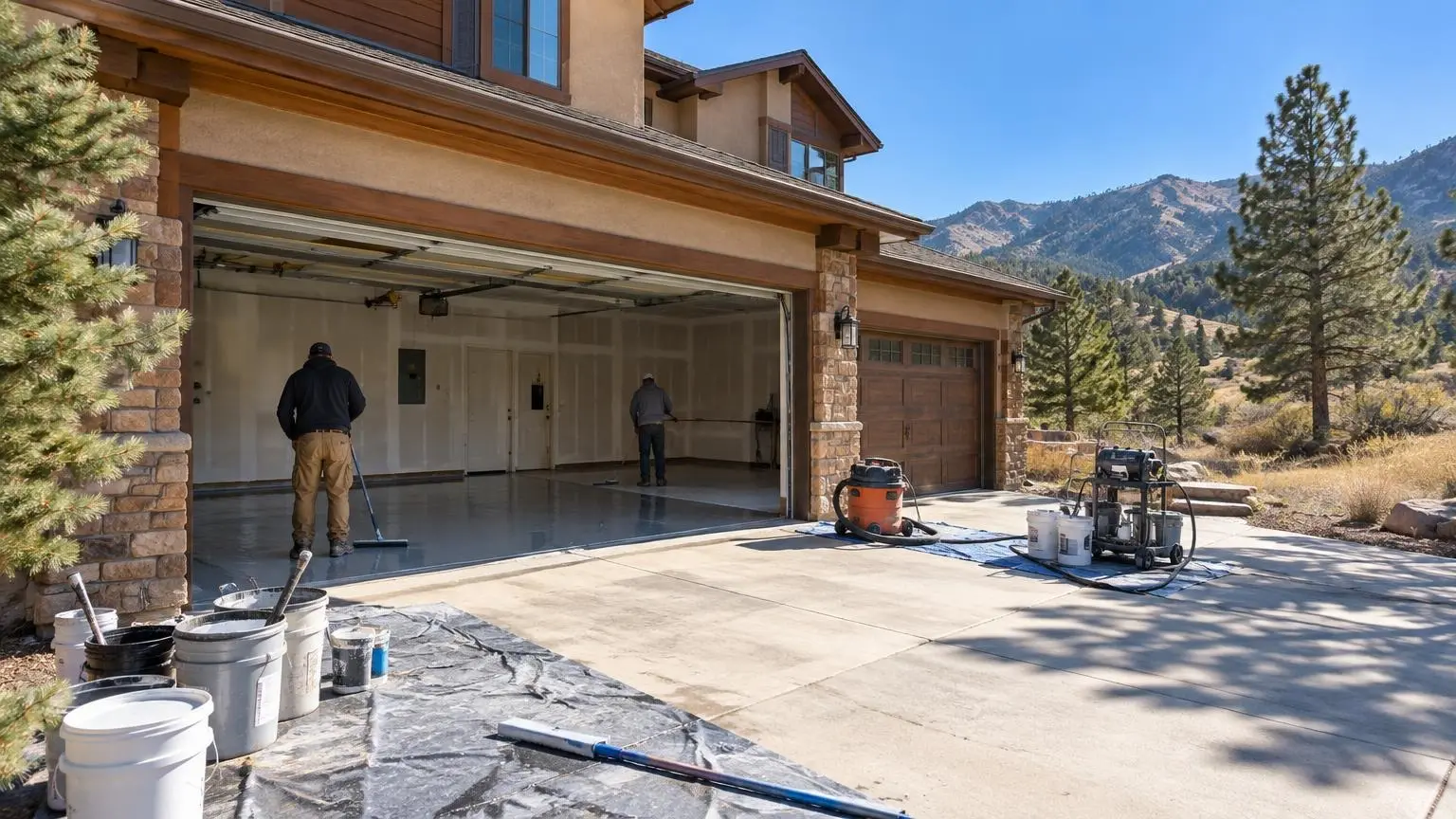
A topcoat suited to high-altitude sun
Polyaspartic Floor Coating in Boulder, CO
Clear, tough and quick to return to service, without the yellowing of standard epoxy.
- Free on-site estimates
- Slab moisture-tested before we coat
- Written quote before work starts
What Polyaspartic Is, and Where It Beats Epoxy
A polyaspartic floor coating is a type of polyurea built for floors. Compared with a standard epoxy topcoat, it cures much faster, stays more flexible as concrete expands and contracts, and resists turning yellow in sunlight. Those three traits make it a strong topcoat for garages in Boulder and along the Front Range.
Why UV stability matters at altitude
UV intensity rises with elevation; the EPA's UV Index guide puts it at about 2% more for every 1,000 feet. Boulder sits at 5,430 feet, and many foothill and mountain homes sit much higher. A garage with a west-facing door can put afternoon sun across the floor for hours, and standard epoxy topcoats can amber under that exposure. Aliphatic polyaspartic topcoats are made to stay clear.
Flexibility for big temperature swings
A Front Range garage can go from below freezing to mild in a day when a chinook blows through, and unheated garages see repeated freeze-thaw as snowmelt drips off cars. A brittle coating is more likely to crack with small temperature-driven movement in the slab. Polyaspartic is more flexible than standard epoxy, though no coating can bridge a crack that is still actively moving; those are repaired or addressed first.
Polyaspartic or epoxy?
It is rarely either-or. Epoxy is an excellent base coat: it builds thickness, wets out the ground concrete and holds flakes well. Polyaspartic is an excellent topcoat: clear, hard and UV-stable. Many of the most durable garage systems combine the two. For some floors, we use polyaspartic for every layer to finish faster.
When fast curing helps
Because polyaspartic cures quickly, many garages can be coated and back in use sooner than with an all-epoxy system. The trade-off is that fast cure leaves less working time, so it takes an experienced crew to install it evenly. That is part of what you are paying for.
Temperature and timing
Polyaspartic can be installed in cooler weather than many epoxies, which helps in the Front Range's long shoulder seasons. Even so, an unheated garage in a January cold snap can be too cold for any coating to cure properly, and very dry, warm summer days shorten working time. We schedule around the forecast and the conditions in your garage on install day.
Caring for a polyaspartic floor
Rinse off de-icer meltwater in winter, use a mild cleaner, and avoid harsh acids. Because the topcoat is the wear layer, an aging polyaspartic floor can often be refreshed with a light sanding and a new clear coat instead of a full replacement.
What This Covers
Polyaspartic can be the whole system or the final layer.
Polyaspartic topcoat over epoxy
An epoxy base and flakes, finished with a clear polyaspartic layer for UV and abrasion resistance.
Full polyaspartic system
Base and topcoat in polyaspartic for a faster return to service.
Topcoat refresh
A light sanding and new polyaspartic topcoat on an older, sound coated floor.
Anti-slip texture
Grit added to the topcoat for steps, entries and floors that get wet with snowmelt.
Typical Polyaspartic Coating Costs
| Coating | Published national range |
|---|---|
| Polyaspartic coating, per sq ft | $4 to $9 |
| Polyaspartic, 400 sq ft garage | $1,600 to $3,600 |
| Polyaspartic, 500 sq ft garage | $2,000 to $4,500 |
| Professional epoxy, per sq ft (for comparison) | $3 to $12 |
Published national ranges from This Old House, Bob Vila and HomeAdvisor (2024 to 2026). Prices in the Boulder area can differ from national averages. Heavy crack repair, old-coating removal and moisture primers add cost. Your written estimate sets the price.
How It Works
1. Evaluate the floor
We check the slab, old coatings and moisture, and decide whether polyaspartic is the full system or the topcoat.
2. Prepare the surface
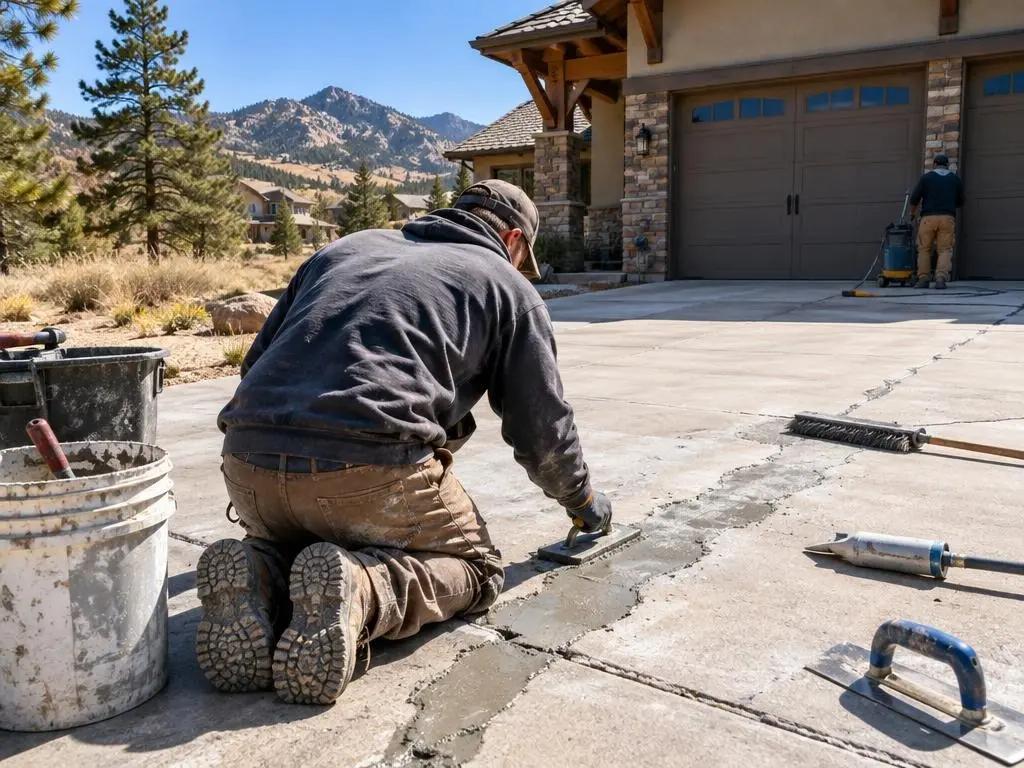
Diamond grinding and crack repair, the same as any coating.
3. Apply in sections
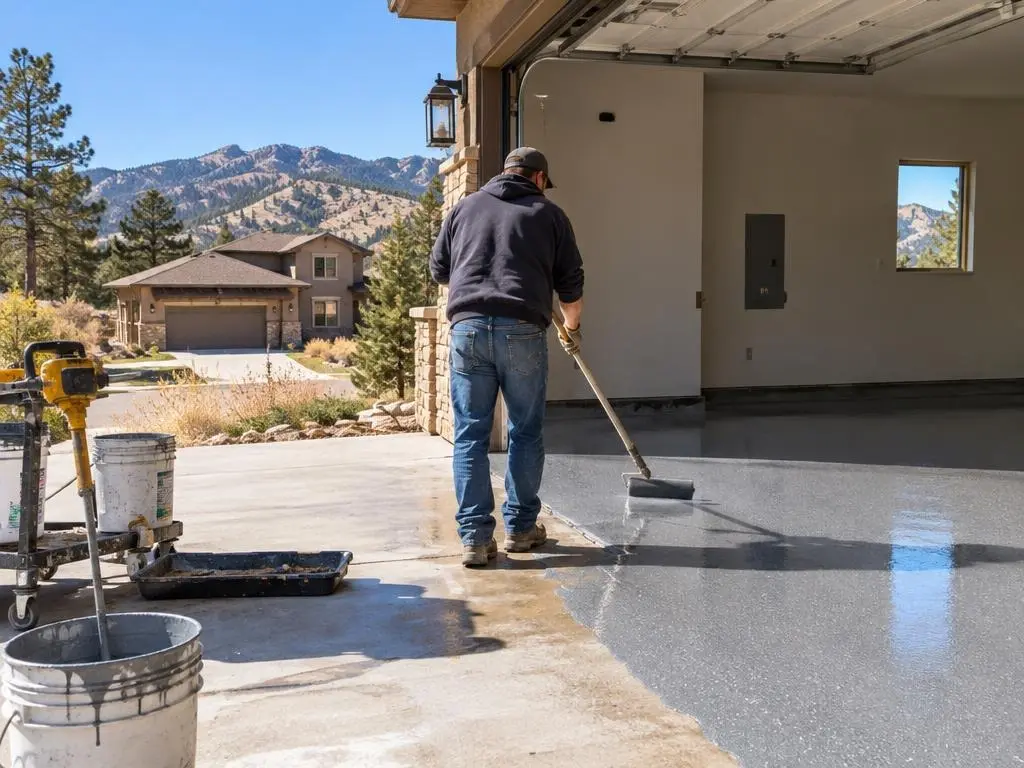
Because it cures fast, polyaspartic goes down in controlled sections for an even finish.
4. Return to service
You get the cure times for walking, storage and parking on your specific floor.
Polyaspartic Floor Coating Questions
Does polyaspartic yellow in the sun?
Aliphatic polyaspartic coatings are UV-stable and resist the ambering that standard epoxy topcoats can show when a garage door is open to strong afternoon sun.
Can polyaspartic go over an existing epoxy floor?
Often, if the existing coating is well bonded. It is sanded to give the new topcoat grip. A peeling floor has to be ground off first.
Is polyaspartic more expensive than epoxy?
Usually somewhat, because the material costs more and the fast cure demands more skilled installation. Many homeowners find the longer-lasting clear finish worth it.
Can polyaspartic be installed in an unheated garage in winter?
It tolerates cooler temperatures than many epoxies, but every coating has a minimum for both the air and the slab. On the coldest days an unheated garage is below that, so we schedule for a stretch of suitable weather instead of forcing an install.
Is polyaspartic a good choice for a mountain home garage?
Yes. Its UV stability and flexibility suit high-elevation garages that see strong sun and deep cold. The main limit is install-day temperature, so mountain jobs are usually scheduled for late spring through early fall.
Polyaspartic Floor Coating Service Areas
- Epoxy Flooring in Boulder, CO
- Epoxy Flooring in Longmont, CO
- Epoxy Flooring in Niwot, CO
- Epoxy Flooring in Gunbarrel, CO
- Epoxy Flooring in Hygiene, CO
- Epoxy Flooring in Lyons, CO
- Epoxy Flooring in Louisville, CO
- Epoxy Flooring in Superior, CO
- Epoxy Flooring in Lafayette, CO
- Epoxy Flooring in Erie, CO
- Epoxy Flooring in Broomfield, CO
- Epoxy Flooring in Nederland, CO
- Epoxy Flooring in Jamestown, CO
- Epoxy Flooring in Eldorado Springs, CO
- Epoxy Flooring in Estes Park, CO
- Epoxy Flooring in Golden, CO
- Epoxy Flooring in Westminster, CO
- Epoxy Flooring in Arvada, CO
- Epoxy Flooring in Wheat Ridge, CO
- Epoxy Flooring in Federal Heights, CO
- Epoxy Flooring in Northglenn, CO
- Epoxy Flooring in Thornton, CO
- Epoxy Flooring in Brighton, CO
- Epoxy Flooring in Dacono, CO
- Epoxy Flooring in Frederick, CO
- Epoxy Flooring in Firestone, CO
- Epoxy Flooring in Mead, CO
- Epoxy Flooring in Berthoud, CO
- Epoxy Flooring in Loveland, CO
- Epoxy Flooring in Johnstown, CO
Get a Polyaspartic Floor Coating Estimate
Ask about a polyaspartic topcoat for your garage.